


K-teashop
Alishan High Mountain Oolong Tea – 2024 Fall Harvest (T-12 Sijichun) by Tea Master Mitch Chung
Alishan High Mountain Oolong Tea – 2024 Fall Harvest (T-12 Sijichun) by Tea Master Mitch Chung
Couldn't load pickup availability
Why You’ll Love It
Why You’ll Love It
Details
Details
Brewing Method
Brewing Method

Experience the Heart of Taiwanese High Mountain Tea
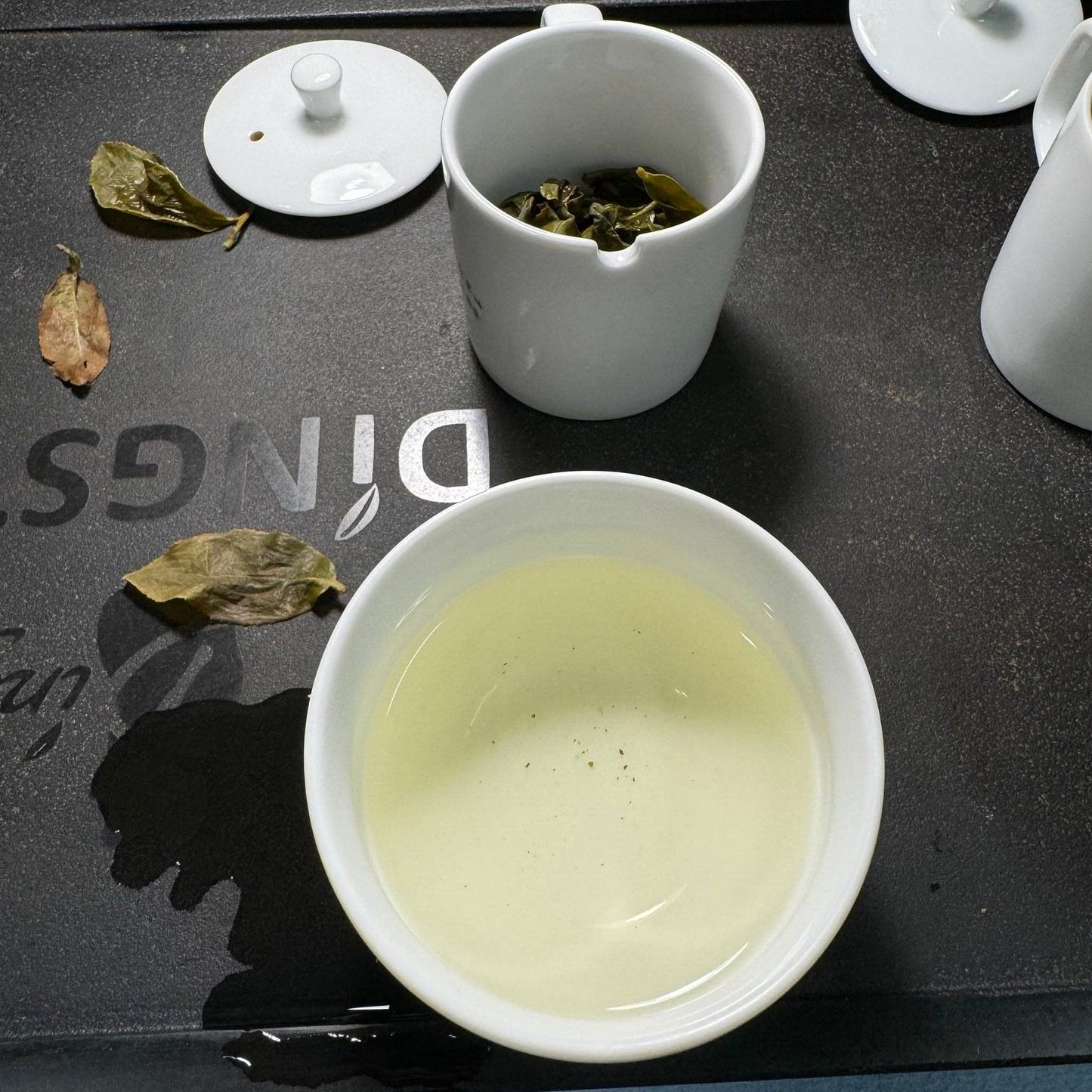
Grown at altitudes above 1,000 metres in the cool, mist-covered mountains of Alishan, this Fall 2024 harvest expresses the qualities Taiwan is celebrated for: floral elegance, natural sweetness and a smooth, buttery finish.
Crafted by Tea Master Mitch Chung, this T-12 Sijichun oolong offers a balanced and expressive cup with a soft texture and a long, clean finish.
This is a limited seasonal harvest, available only in limited quantities.
Recommended preparation
Use 3 g of tea per 150 ml of water. Infuse at 90–95°C for 60–90 seconds. The leaves may be infused several times; adjust the infusion time to taste.
Produktinformationen
Sachbezeichnung: Oolong-Tee (teiloxidierter Tee)
Zutaten: 100 % Oolong-Tee
Nettogewicht: 30 g / 50 g (je nach gewählter Variante)
Produktionsland: Taiwan (Alishan)
Empfohlene Zubereitung: 3 g Tee mit 150 ml Wasser bei 90–95°C aufgiessen und 60–90 Sekunden ziehen lassen. Mehrfach aufgiessbar.
Aufbewahrung: Kühl, trocken, luftdicht verschlossen und vor Licht geschützt lagern.
Nährwertdeklaration: Gemäss Anhang 9 LIV ist für Tee ohne weitere nährwertverändernde Zutaten keine Nährwertdeklaration erforderlich.
Mindestens haltbar bis / LOT: Siehe Verpackung.
Verantwortliches Unternehmen: KTea Shop by Kim, Vulkanstrasse 110 C, 8048 Zürich, Schweiz




Aroma & Taste Profile
-
Top Notes:
-
Middle Notes:
-
Base Notes:
Blog posts
View all-

Wagashi and Matcha: How Japanese Sweets Create ...
Wagashi and matcha are not simply served together because both are Japanese. Their sweetness, bitterness, texture and visual qualities are designed to create balance.
Wagashi and Matcha: How Japanese Sweets Create ...
Wagashi and matcha are not simply served together because both are Japanese. Their sweetness, bitterness, texture and visual qualities are designed to create balance.
-

Why Wagashi Could Become Your Café’s Next Signa...
Your café may not need another cheesecake. It may need one dessert that customers can recognise, remember and return for.
Why Wagashi Could Become Your Café’s Next Signa...
Your café may not need another cheesecake. It may need one dessert that customers can recognise, remember and return for.
-

Wagashi vs Mochi: What Is the Difference?
Wagashi and mochi are often used as if they mean the same thing. They are connected, but they are not interchangeable.
Wagashi vs Mochi: What Is the Difference?
Wagashi and mochi are often used as if they mean the same thing. They are connected, but they are not interchangeable.


