


Osulloc
OSULLOC Tea Set | 9 Korean Fruit Tea Flavors | 36 Tea Bags
OSULLOC Tea Set | 9 Korean Fruit Tea Flavors | 36 Tea Bags
Couldn't load pickup availability
Why You’ll Love It
Why You’ll Love It
Details
Details
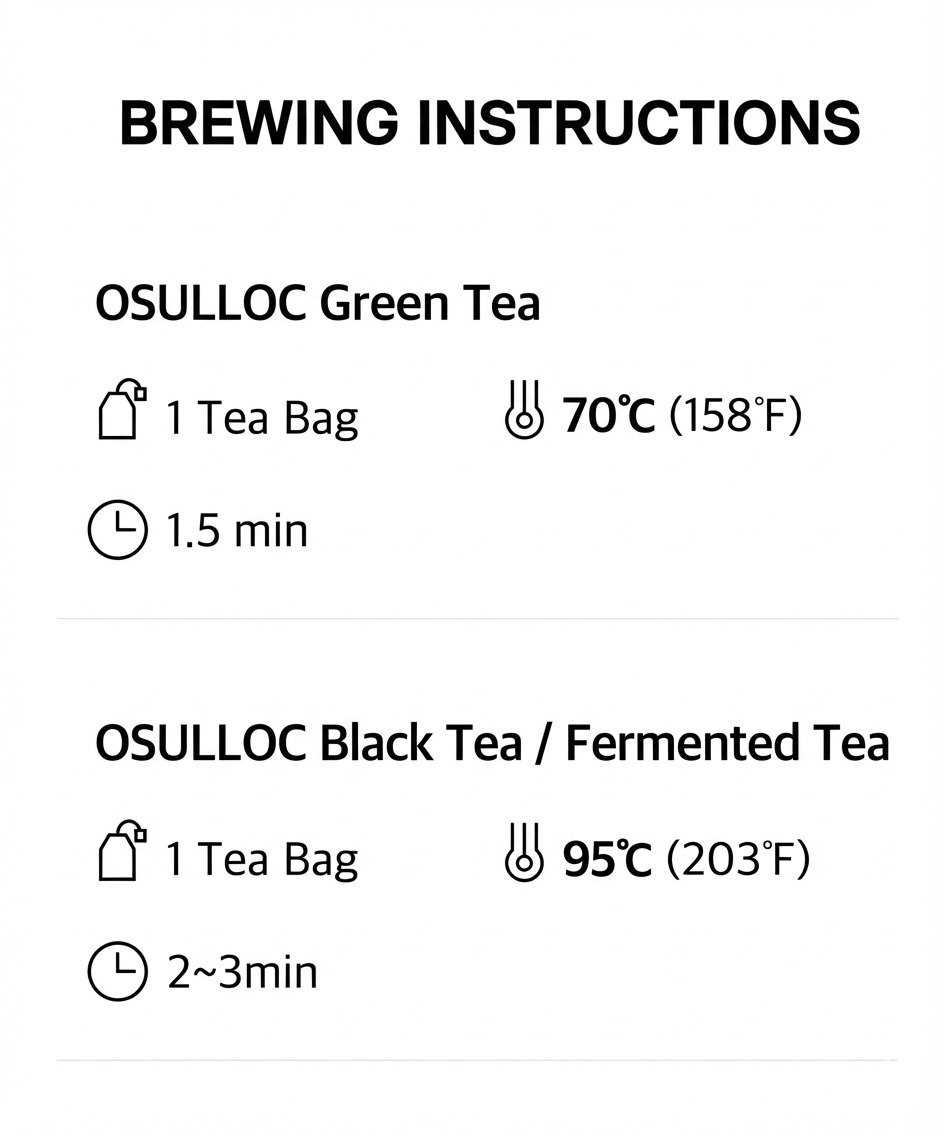
Brewing Method
Brewing Method


You don't know what tea you like — and that's exactly why this set exists.
Every tea box is a gamble. One flavor, 20 bags, and by cup five you already wish you'd picked something else. What if you could taste 9 different teas before committing to one?
The OSULLOC Blooming Tea Gift Set
9 fruit tea blends · 36 tea bags · One beautiful box from Korea's most iconic tea brand.
This isn't a sampler — it's a curated collection of OSULLOC's finest fruit tea blends from Jeju Island. Each one crafted with real fruit, real flowers, and over 40 years of Korean tea-making tradition.
Open the box. Pick a color. Let the aroma surprise you before the first sip does.
What makes this set different
🍊 9 unique blends from Jeju Island — Korea's purest tea-growing region (UNESCO heritage site). Real fruit, no artificial flavoring.
🌋 Volcanic soil, cleaner taste — Jeju's mineral-rich volcanic ash soil produces smoother, more aromatic tea than mass-produced alternatives.
🎁 Gift-ready packaging — Premium OSULLOC box with branded carrying bag. No wrapping needed. Hand it to someone and watch their face light up.
☕ CHF 2.08 per cup — 36 bags of premium Korean tea. Less than your daily coffee, and far more interesting.
Common questions
Is this caffeine-free?
Some blends have light caffeine (Peach Oolong), others are naturally caffeine-free (Apple Chamomile, Hibiscus Berry). All are gentle enough for any time of day.
Is this a good gift?
It's our best-selling gift. Beautiful packaging, 9 flavors to explore, no wrapping needed.
I've never tried Korean tea — will I like it?
That's exactly why this set exists. 9 flavors means you're almost guaranteed to find at least 3 you love.
How many cups?
36 cups (4 bags × 9 flavors). Each bag can be steeped twice, so up to 72 cups tota


Related Reading

What Is Mochi? Everything You Need to Know About Japan’s Most Famous Sweet
What is mochi, and how does it differ from daifuku and wagashi? Learn how Japanese moch...
Read article →Japanese Dessert Course in Zurich for Pastry Chefs and Café Owners
A useful professional course should teach a method you can repeat, adapt and eventually...
Read article →
What Is Wagashi? A Beginner’s Guide to Japanese Traditional Sweets
Wagashi is Japan’s traditional confectionery, shaped by seasonality, tea culture and ha...
Read article →
Wagashi vs Mochi: What Is the Difference?
Wagashi and mochi are often used as if they mean the same thing. They are connected, bu...
Read article →
How Pan-Firing Shapes the Taste of Korean Green Tea
Traditional Korean green tea is closely associated with pan-firing. Learn how direct he...
Read article →
What Is Wagashi? A Beginner’s Guide to Japanese Confectionery
Wagashi is often translated as Japanese confectionery, but it is also a way of expressi...
Read article →
Wagashi Masterclass Zurich: Learn Professional Japanese Confectionery
A rare three-day Wagashi Masterclass in Zurich for pastry chefs, café owners, confectio...
Read article →
"Ceremonial grade" doesn't mean what you think it does — KTeaShop
Read article →
How to Tell If Your Tea is Good Quality | Tea Guide Zurich
Read article →
Understanding Matcha Cultivars: Yabukita, Okumidori & Samidori | KTeashop Zürich
Read article →
I Don’t Know Where to Get Authentic Matcha — Zürich’s 5 Senses of Matcha Tasting
Read article →
How to Whisk Matcha the Japanese Way
Read article →
Ancient Matcha Secrets: Banishing Brain Fog & Supercharges Your Mind
Read article →
Die Kunst & Wissenschaft von Matcha: Der ultimative Leitfaden eines Tea Sommeliers
Read article →
The Art & Science of Matcha: A Tea Sommelier’s Ultimate Guide
Read article →
Discover Tea Omakase: Zurich's New Mental Spa Experience
Read article →
Matcha vs Green Tea: Which One is Healthier? - Discover the Differences
Read article →
Is Matcha the Perfect Alternative to Coffee?
Read article →