


K-teashop
Autumn Harvest Oriental Beauty Oolong Tea – A Symphony of Five Colors
Autumn Harvest Oriental Beauty Oolong Tea – A Symphony of Five Colors
Couldn't load pickup availability
Why You’ll Love It
Why You’ll Love It
Details
Details
Brewing Method
Brewing Method
Step into the world of elegance with Oriental Beauty Oolong Tea, also known as Bai Hao Oolong, crafted from the Chin-Shin-Dapan cultivars.
This exceptional tea, often called "The Tea of Five Colors," is crafted from leaves bitten by tea leafhopper, which trigger a natural oxidation process that brings out its signature fruity and honeyed profile. Sourced from Miaoli region in Taiwan.

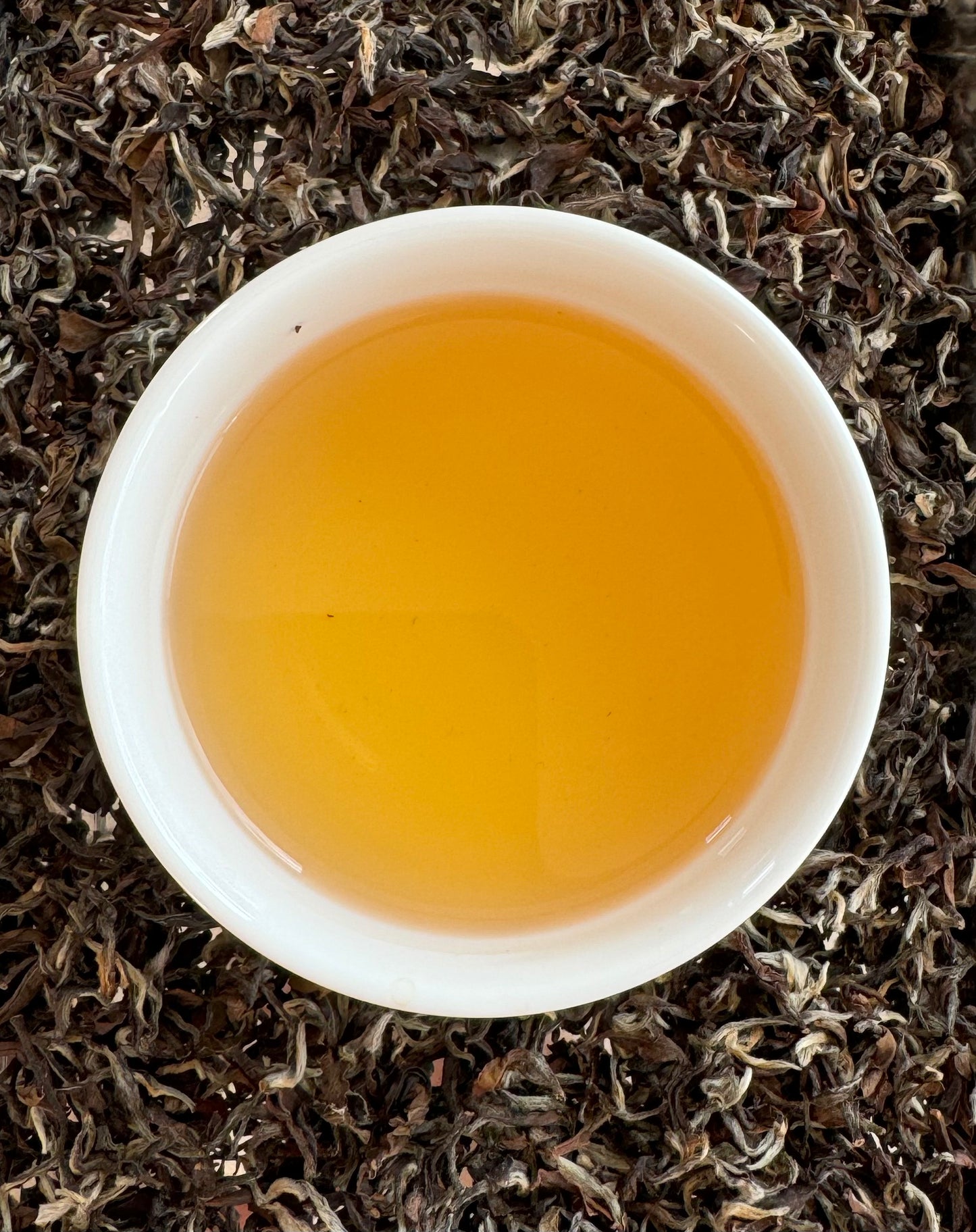
The dry leaves are a mesmerizing mix of white, green, yellow, brown, and red hues, symbolizing the tea’s artisanal craftsmanship. Known for its illustrious history, this tea earned its nickname "Oriental Beauty" after being praised by the British Queen for its remarkable flavor and elegance.
Aroma:
Delicate yet rich, with layers of honey, lychee, red guava, and passion fruit, complemented by a subtle fermentation note reminiscent of red wine.
Flavor Profile:
A luxurious balance of natural sweetness and vibrant acidity, offering a fruity complexity that lingers on the palate. The tea’s nuanced flavors include gentle honey, tropical fruit notes, and a faint floral undertone. The finish is smooth and full-bodied, with a depth that speaks to its partial oxidation and meticulous production.
Appearance:
The brewed liquor is a radiant orange, embodying warmth and richness. The leaves unfurl beautifully, revealing their multi-colored nature and premium quality.
Celebrated for its historical ties and exceptional craftsmanship, Oriental Beauty Oolong Tea is a masterpiece of flavor and aroma. Whether you’re a seasoned tea connoisseur or seeking an introduction to high-quality oolong, this tea promises an unforgettable experience.
Sip the tea that captured the admiration of royalty.


Related Reading

What Is Wagashi? A Beginner’s Guide to Japanese Traditional Sweets
Wagashi is Japan’s traditional confectionery, shaped by seasonality, tea culture and ha...
Read article →
Wagashi vs Mochi: What Is the Difference?
Wagashi and mochi are often used as if they mean the same thing. They are connected, bu...
Read article →
How Pan-Firing Shapes the Taste of Korean Green Tea
Traditional Korean green tea is closely associated with pan-firing. Learn how direct he...
Read article →
What Is Wagashi? A Beginner’s Guide to Japanese Confectionery
Wagashi is often translated as Japanese confectionery, but it is also a way of expressi...
Read article →
Wagashi Masterclass Zurich: Learn Professional Japanese Confectionery
A rare three-day Wagashi Masterclass in Zurich for pastry chefs, café owners, confectio...
Read article →
"Ceremonial grade" doesn't mean what you think it does — KTeaShop
Read article →
How to Tell If Your Tea is Good Quality | Tea Guide Zurich
Read article →
Understanding Matcha Cultivars: Yabukita, Okumidori & Samidori | KTeashop Zürich
Read article →
I Don’t Know Where to Get Authentic Matcha — Zürich’s 5 Senses of Matcha Tasting
Read article →
How to Whisk Matcha the Japanese Way
Read article →
Ancient Matcha Secrets: Banishing Brain Fog & Supercharges Your Mind
Read article →
Die Kunst & Wissenschaft von Matcha: Der ultimative Leitfaden eines Tea Sommeliers
Read article →
The Art & Science of Matcha: A Tea Sommelier’s Ultimate Guide
Read article →
Discover Tea Omakase: Zurich's New Mental Spa Experience
Read article →
Matcha vs Green Tea: Which One is Healthier? - Discover the Differences
Read article →
Is Matcha the Perfect Alternative to Coffee?
Read article →