K-teashop
Premium Yame Okumidori Ceremonial Matcha Award-Winning | From Fukuoka, Japan | Organic Certified
Impossibile caricare la disponibilità di ritiro
Why You’ll Love It
Why You’ll Love It
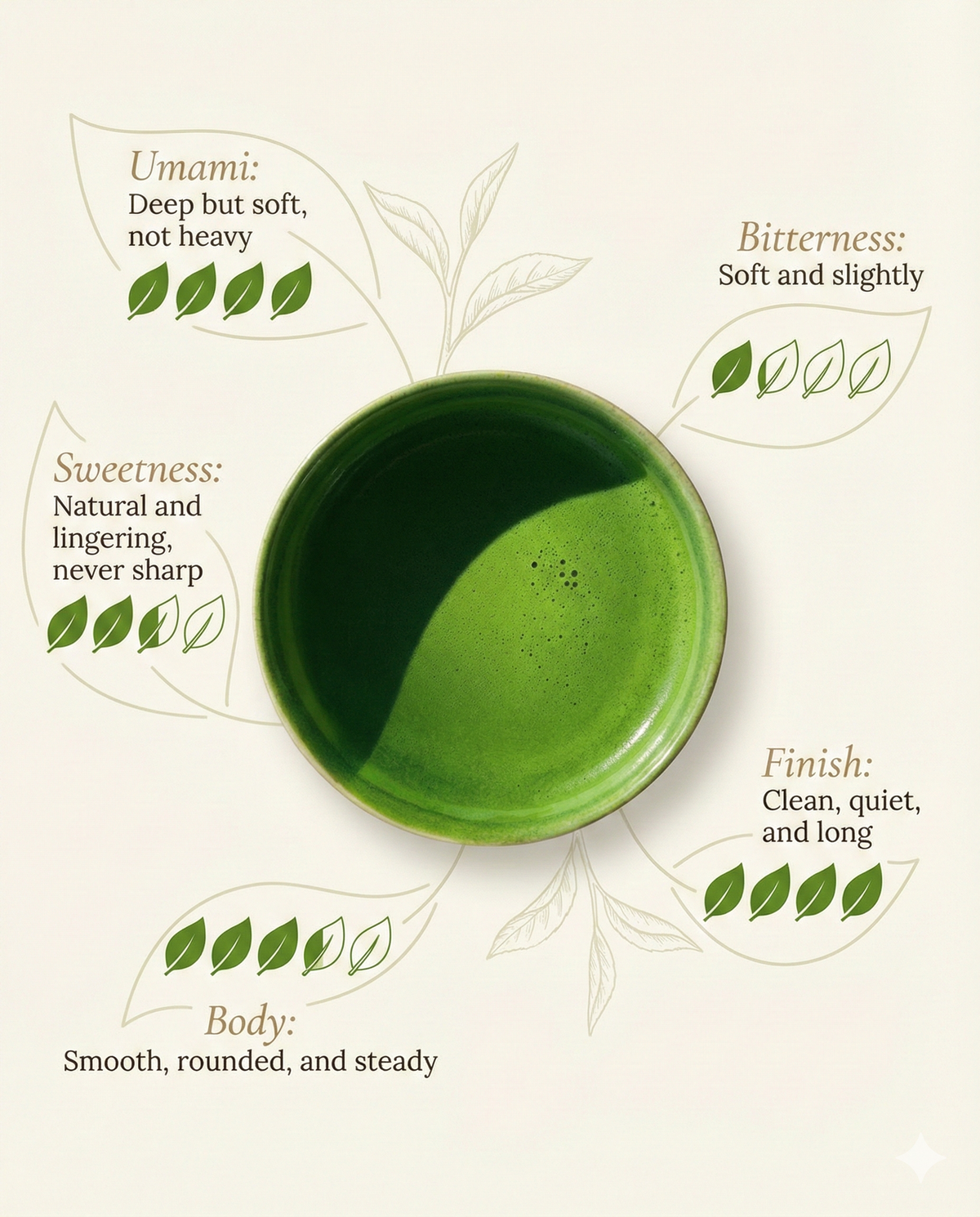
Yame matcha is known for depth, softness, and balance.
This particular Okumidori cultivar is prized for its natural sweetness, deep green color, and umami profile — without harsh bitterness.
After harvest, the tea was rested and matured (熟成抹茶) before stone grinding.
This aging allows sharp edges to soften and flavor layers to integrate, creating a rounder, more composed matcha.
The result is a matcha designed not for stimulation, but for presence.
Details
Details
- Region: Yame, Fukuoka, Japan
- Harvest: May 2025 — First Flush (Ichibancha)
- Grinding: November 2025
- Processing: Aged before stone grinding (熟成抹茶)
Brewing Method
Brewing Method
1. 1.5g of matcha
2. 60ml 70°C hot water
3. Whisk briskly in a “M” or “W” motion, not circle
Yame Okumidori Ceremonial Matcha
Selected and served by KTeaShop
If coffee feels too aggressive and most matcha feels sharp
this is for you.
Many people turn to matcha for focus, but end up with bitterness, stomach tension, or overstimulation. The problem is not matcha itself. It’s how most matcha is selected.
How this matcha is different
As a certified tea sommelier and master, I have tasted matcha across regions, cultivars, and harvest styles in Japan. There are more than 27 types of matcha
and over 9 major tea cultivars yet most brands still label everything simply as “ceremonial grade.”
That word alone tells you nothing. When I select matcha, I am not looking for what impresses once. I am looking for what people want to return to.

When I design a matcha tasting, I am not looking for what stands out once. I am looking for what people want to return to.
This is the matcha that stayed.
What you will notice when you drink it
This matcha is designed to keep your focus steady, not push it.
- No sharp bitterness
- No nervous stimulation
- No heavy or grassy aftertaste
Instead, you experience clarity that feels natural and calm.
This matcha is for you if:
- Coffee feels too strong or draining
- You want focus without stimulation
- You value balance over intensity
- You want a matcha you can trust, not compare endlessly
You do not need to keep searching.
This choice has already been made for you.
Brewing Instructions:
Share

Blog posts
Visualizza tutto-
What Is Wagashi? A Beginner’s Guide to Japanese...
Wagashi is Japan’s traditional confectionery, shaped by seasonality, tea culture and handwork. This beginner’s guide explains what wagashi is, what it is made from and why it is served with...
What Is Wagashi? A Beginner’s Guide to Japanese...
Wagashi is Japan’s traditional confectionery, shaped by seasonality, tea culture and handwork. This beginner’s guide explains what wagashi is, what it is made from and why it is served with...
-
Wagashi vs Mochi: What Is the Difference?
Wagashi and mochi are often used as if they mean the same thing. They are connected, but they are not interchangeable.
Wagashi vs Mochi: What Is the Difference?
Wagashi and mochi are often used as if they mean the same thing. They are connected, but they are not interchangeable.
-
How Pan-Firing Shapes the Taste of Korean Green...
Traditional Korean green tea is closely associated with pan-firing. Learn how direct heat stops oxidation and shapes the warm, nutty and softly roasted character of the finished tea.
How Pan-Firing Shapes the Taste of Korean Green...
Traditional Korean green tea is closely associated with pan-firing. Learn how direct heat stops oxidation and shapes the warm, nutty and softly roasted character of the finished tea.