K-teashop
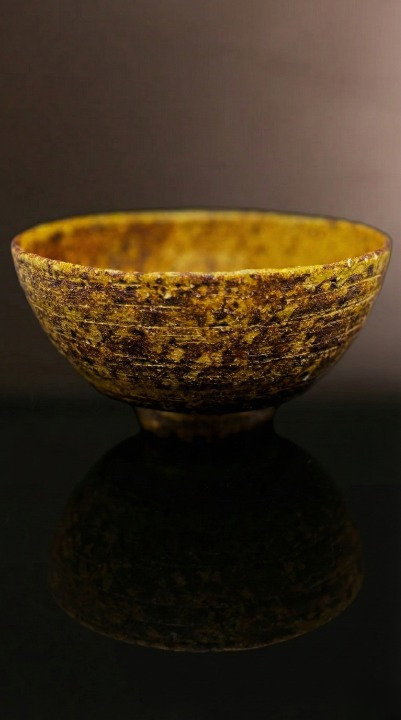
Korean Matcha Bowl Chawan by Master Na Yong Hwan – One-of-a-Kind Traditional Korean Ceramic
Impossibile caricare la disponibilità di ritiro
Details
Details
Key characteristics of Korean stoneware:
- Fired at extremely high temperature (1,250–1,300°C)
This makes the bowl durable, non-porous, and able to hold heat steadily.
- Iron-rich and mineral-rich clay
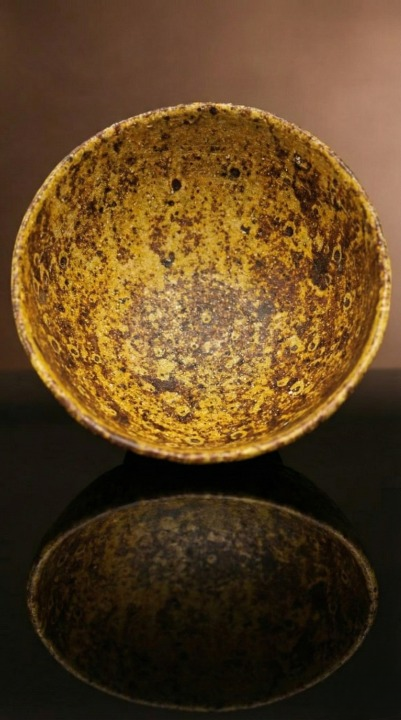
Korean clay naturally contains iron, quartz, feldspar, and volcanic minerals—this gives the bowl its warm, earthy, speckled texture.
- Natural, reactive glaze
The gold-amber glaze on this bowl is created through traditional firing processes, where iron in the clay reacts with the glaze and heat to produce a landscape-like, organic surface.
In Korean ceramics, these natural variations are considered signs of life, artistry, and individuality.
Breathable surface
Stoneware retains heat while allowing air flow through micro-textures, making it ideal for whisking tea.
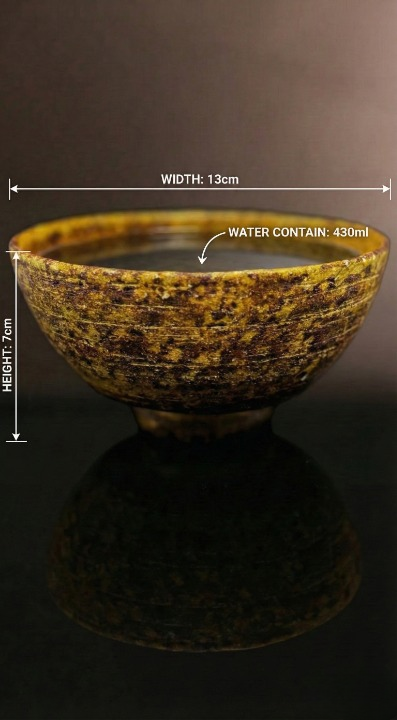
Detailed Size Information
FAQ — Care & Cleaning
Can I wash this bowl in the dishwasher?
No. This chawan should not be placed in the dishwasher.
Dishwasher heat and detergents can damage the glaze and shorten the lifespan of handmade ceramics.
How do I properly clean the bowl?
After use, pour in hot water (around 100°C), swirl gently, and rinse.
This removes matcha oils while protecting the glaze.
Do I need soap?
No. Traditional tea bowls are washed without soap.
Just hot water is enough for everyday cleaning.
What should I use to wipe it?
Use a soft cotton cloth.
Avoid abrasive sponges or scrubbers—these can scratch the glaze.
Who Is This For?
Who Is This For?
A BOWL THAT CARRIES KOREAN HERITAGE
This Korean Matcha Bowl (Chawan) is shaped by Master Potter Na Yong Hwan, a highly respected ceramic artist whose work has represented Korean craft in national and international exhibitions for over three decades.
Each bowl reflects Icheon’s long lineage of traditional ceramics—a region recognized by UNESCO for its deep cultural craft history.
This chawan is meant to be used daily:
not as decoration, but as a living object that carries warmth, history, and the quiet strength of Korean tea culture.
Korean tea bowls are known for their natural textures, earthy tones, and honest forms.
This piece embodies:
• Simplicity with intention (담백함)
• Beauty shaped by fire, soil, and time
• A connection between maker, material, and daily life
The gold-amber glaze resembles traditional lacquer and the warm tones of Korean mountain soil—an aesthetic found throughout Korea’s ceramic heritage.
Share

Blog posts
Visualizza tutto-
How to Tell If Your Tea is Good Quality | Tea G...
How to Tell If Your Tea Is Actually Good Quality (And Why Most People Can't) You're standing in a tea shop in Zurich. Two green teas. One costs CHF 15....
How to Tell If Your Tea is Good Quality | Tea G...
How to Tell If Your Tea Is Actually Good Quality (And Why Most People Can't) You're standing in a tea shop in Zurich. Two green teas. One costs CHF 15....
-
Understanding Matcha Cultivars: Yabukita, Okumi...
Matcha cultivars such as Yabukita, Okumidori, and Samidori define the flavor, aroma, and texture of authentic Japanese matcha. Each cultivar—essentially a tea plant variety—has unique genetic characteristics shaped by region,...
Understanding Matcha Cultivars: Yabukita, Okumi...
Matcha cultivars such as Yabukita, Okumidori, and Samidori define the flavor, aroma, and texture of authentic Japanese matcha. Each cultivar—essentially a tea plant variety—has unique genetic characteristics shaped by region,...
-
I Don’t Know Where to Get Authentic Matcha — Zü...
Why Zürich Struggles to Find Authentic Matcha If you’ve searched “where to buy real matcha in Zürich” and ended up disappointed, you’re not alone. Most cafés serve culinary-grade powder intended...
I Don’t Know Where to Get Authentic Matcha — Zü...
Why Zürich Struggles to Find Authentic Matcha If you’ve searched “where to buy real matcha in Zürich” and ended up disappointed, you’re not alone. Most cafés serve culinary-grade powder intended...