


K-teashop
Alishan High Mountain Black Tea – 2024 Fall Harvest (T-12 Sijichun) by Tea Master Mitch Chung
Alishan High Mountain Black Tea – 2024 Fall Harvest (T-12 Sijichun) by Tea Master Mitch Chung
Couldn't load pickup availability
Why You’ll Love It
Why You’ll Love It
Details
Details
Brewing Method
Brewing Method

A high-mountain black tea with floral depth
Grown above 1,000 metres in Taiwan’s mist-covered Alishan mountains, this Fall 2024 black tea is made from the T-12 Sijichun cultivar. Tea Master Mitch Chung transforms a cultivar best known for oolong into a smooth and expressive black tea.
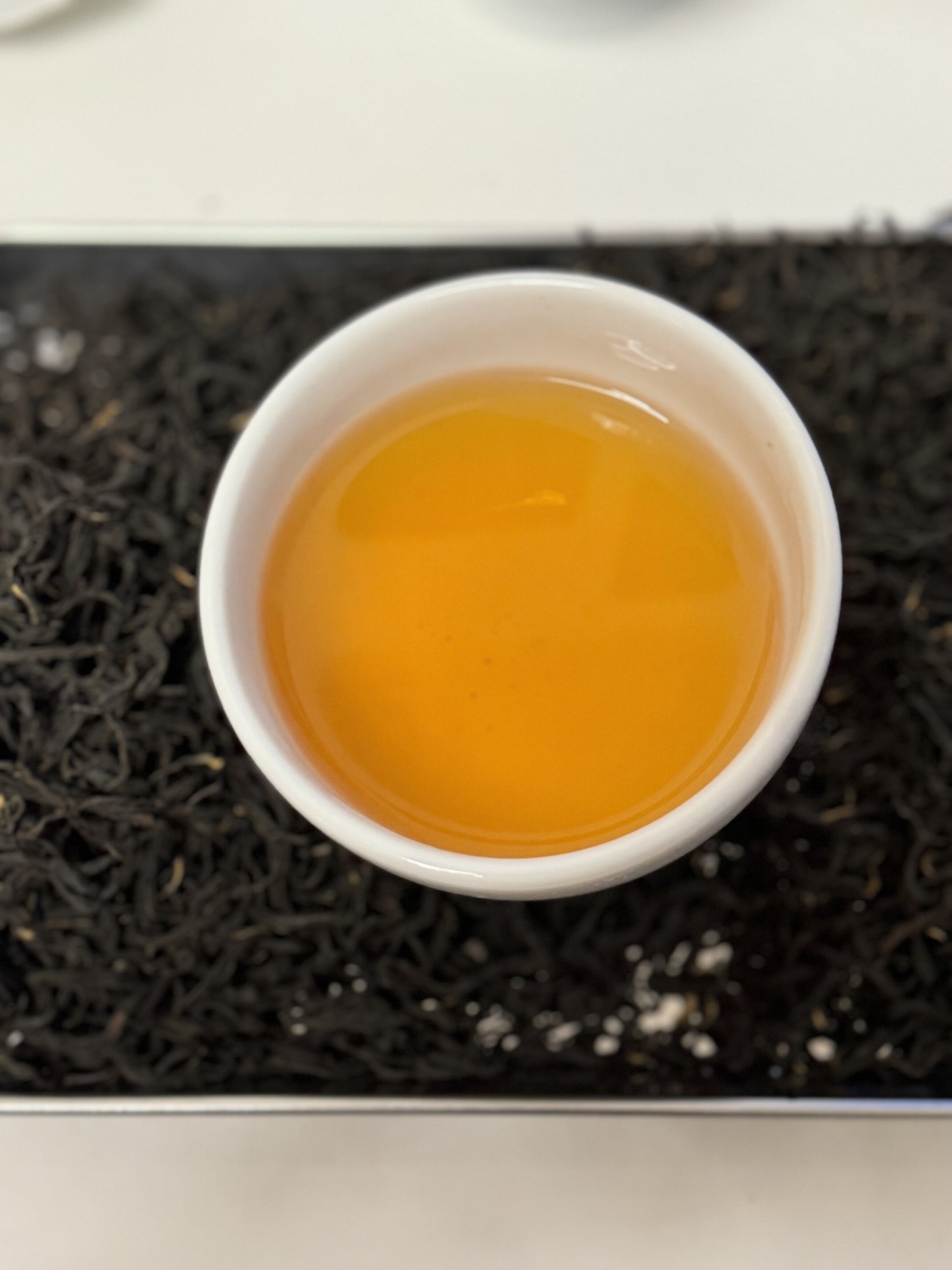
The cup opens with floral and honeyed aromas, followed by malt, caramel and dried-fruit notes. Its texture is soft and rounded, with a clean finish that makes it enjoyable both on its own and alongside desserts.
- Origin: Alishan, Taiwan
- Cultivar: T-12 Sijichun
- Harvest: Autumn 2024
- Tea maker: Mitch Chung
- Tasting notes: floral, honey, malt, caramel and dried fruit
Recommended preparation
Use 3–5 g of tea per 250 ml of water. Infuse at 95°C for 3–5 minutes. The leaves may be infused again; adjust the infusion time to taste.
Produktinformationen
Sachbezeichnung: Schwarztee
Zutaten: 100 % Schwarztee
Nettogewicht: 15 g / 30 g (je nach gewählter Variante)
Produktionsland: Taiwan (Alishan)
Empfohlene Zubereitung: 3–5 g Tee mit 250 ml Wasser bei 95°C aufgiessen und 3–5 Minuten ziehen lassen. Erneut aufgiessbar.
Aufbewahrung: Kühl, trocken, luftdicht verschlossen und vor Licht geschützt lagern.
Nährwertdeklaration: Gemäss Anhang 9 LIV ist für Tee ohne weitere nährwertverändernde Zutaten keine Nährwertdeklaration erforderlich.
Mindestens haltbar bis / LOT: Siehe Verpackung.
Verantwortliches Unternehmen: KTea Shop by Kim, Vulkanstrasse 110 C, 8048 Zürich, Schweiz


Related Reading

Why Korean Green Tea Is So Rare: Korean Tea Grades Explained
Why is handmade Korean green tea so rare? Learn how Gogu, Ujeon, Sejak, Jungjak and Dae...
Read article →Best Japanese Cooking Classes in Zurich: From Sushi to Wagashi
Zurich offers several ways to explore Japanese food, from sushi and ramen to matcha, mo...
Read article →
Wagashi and Matcha: How Japanese Sweets Create Balance With Tea
Wagashi and matcha are not simply served together because both are Japanese. Their swee...
Read article →
Why Wagashi Could Become Your Café’s Next Signature Dessert
Your café may not need another cheesecake. It may need one dessert that customers can r...
Read article →
Wagashi vs Mochi: What Is the Difference?
Wagashi and mochi are often used as if they mean the same thing. They are connected, bu...
Read article →
How Pan-Firing Shapes the Taste of Korean Green Tea
Traditional Korean green tea is closely associated with pan-firing. Learn how direct he...
Read article →
Wagashi Masterclass Zurich: Learn Professional Japanese Confectionery
A rare three-day Wagashi Masterclass in Zurich for pastry chefs, café owners, confectio...
Read article →
"Ceremonial grade" doesn't mean what you think it does — KTeaShop
Read article →
How to Tell If Your Tea is Good Quality | Tea Guide Zurich
Read article →
Understanding Matcha Cultivars: Yabukita, Okumidori & Samidori | KTeashop Zürich
Read article →
I Don’t Know Where to Get Authentic Matcha — Zürich’s 5 Senses of Matcha Tasting
Read article →
How to Whisk Matcha the Japanese Way
Read article →
Ancient Matcha Secrets: Banishing Brain Fog & Supercharges Your Mind
Read article →
Die Kunst & Wissenschaft von Matcha: Der ultimative Leitfaden eines Tea Sommeliers
Read article →
The Art & Science of Matcha: A Tea Sommelier’s Ultimate Guide
Read article →
Discover Tea Omakase: Zurich's New Mental Spa Experience
Read article →
Matcha vs Green Tea: Which One is Healthier? - Discover the Differences
Read article →
Is Matcha the Perfect Alternative to Coffee?
Read article →